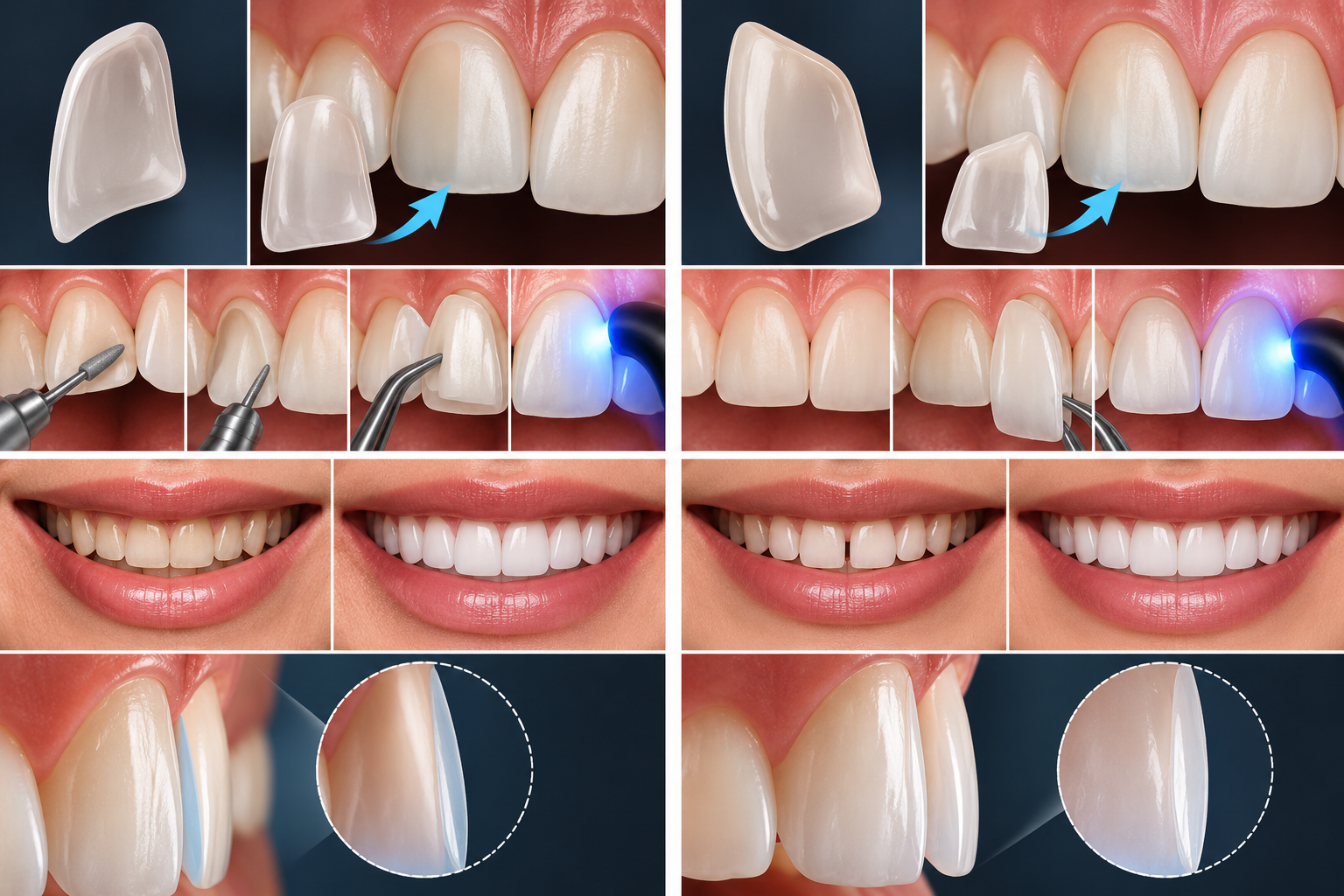
What Are Porcelain Laminate Veneers and Veneers?
Aesthetic dentistry considers many factors together, including the color, shape, size, and alignment of the teeth. Veneers and porcelain laminate veneers may be preferred to address aesthetic concerns such as discoloration, minor fractures, irregular tooth shape, or gaps between teeth.
Porcelain laminate veneers are very thin porcelain restorations applied to the front surfaces of the teeth. They are generally designed to preserve as much of the natural tooth structure as possible.
Veneer, on the other hand, is a general term for a thin restoration that covers the visible front surface of a tooth. Veneers can be made from different materials. Therefore, “veneer” is a broader term, while porcelain laminate veneers can be considered one type of veneer.
Are Porcelain Laminate Veneers and Veneers the Same Thing?
In everyday use, terms such as “porcelain veneer,” “porcelain laminate veneer,” and “laminate veneer” are sometimes used interchangeably. However, technically, there may be a difference in scope.
The term “veneer” generally refers to an aesthetic restoration covering the front surface of a tooth, while “porcelain laminate veneer” specifically refers to thin porcelain layers applied to the front surface of the teeth.
Therefore, the appropriate treatment should not be determined solely by the name of the procedure. The condition of the teeth, bite relationship, enamel structure, gum health, and the patient’s aesthetic expectations should all be evaluated together.
How Are Porcelain Laminate Veneers Applied?
The first step is a comprehensive evaluation of the patient’s oral and dental structure. The dentist examines the shape, color, position, bite, and gum condition of the teeth.
The appropriate tooth shape and color are then planned according to the patient’s expectations. In some cases, digital design and intraoral scanning technologies may be used for treatment planning.
The veneers are custom-made in a dental laboratory. In the final stage, the porcelain laminates are positioned appropriately on the teeth and bonded using special adhesive techniques.
What Are the Advantages of Veneer Treatment?
The main purpose of veneer treatment is to improve the aesthetic appearance of the teeth. In suitable patients, veneers may help with:
Improving the appearance of tooth discoloration,
Adjusting the shape and size of the teeth,
Improving the appearance of minor fractures or wear,
Closing certain gaps between teeth,
Creating a more balanced and natural-looking smile.
However, not every patient is suitable for veneers or porcelain laminate veneers. Treatment planning should be carefully evaluated, especially in cases of teeth grinding or clenching.
Porcelain Laminate Veneers or Another Type of Veneer?
There is no single answer to this question because the ideal treatment option varies depending on the individual’s oral and dental structure.
Porcelain laminate veneers are frequently preferred in smile design because of their thin structure and their ability to provide a natural-looking aesthetic result. However, in some patients, different veneer materials or other restorative treatments may be more appropriate.
Your dentist can determine the most suitable option by evaluating the condition of your teeth, your expectations, budget, oral hygiene, and long-term needs.
How Long Do Porcelain Laminate Veneers and Veneers Last?
The lifespan of restorations can vary depending on the material used, quality of treatment, oral and dental care, eating habits, and how the teeth are used.
Regular brushing, the use of dental floss or appropriate interdental cleaning methods, and routine dental check-ups can help protect restorations. Habits such as biting hard objects or nail biting may also damage restorations.
How Is the Decision Made Between Porcelain Laminate Veneers and Veneers?
The choice between porcelain laminate veneers and another type of veneer should be made individually. A comprehensive dental examination is required first.
Your dentist can evaluate the condition of your teeth and gums and explain which treatment may be appropriate for you. If necessary, X-rays, digital intraoral scans, photographs, and digital smile design may also be used.
Conclusion
Although porcelain laminate veneers and veneers are used for similar purposes, they do not necessarily have exactly the same technical meaning. Porcelain laminate veneers refer to thin porcelain restorations applied to the front surface of the teeth, while veneer is a broader term that can include front-surface restorations made from different materials.
The appropriate treatment should be selected not only according to aesthetic expectations but also according to the overall condition of the teeth and oral structures. A personal evaluation by an experienced dentist before treatment is important for achieving a healthy, natural-looking, and long-lasting result.
Note: This content is for general informational purposes only. The most appropriate treatment for you should be determined following an examination by a dentist.
Related Articles
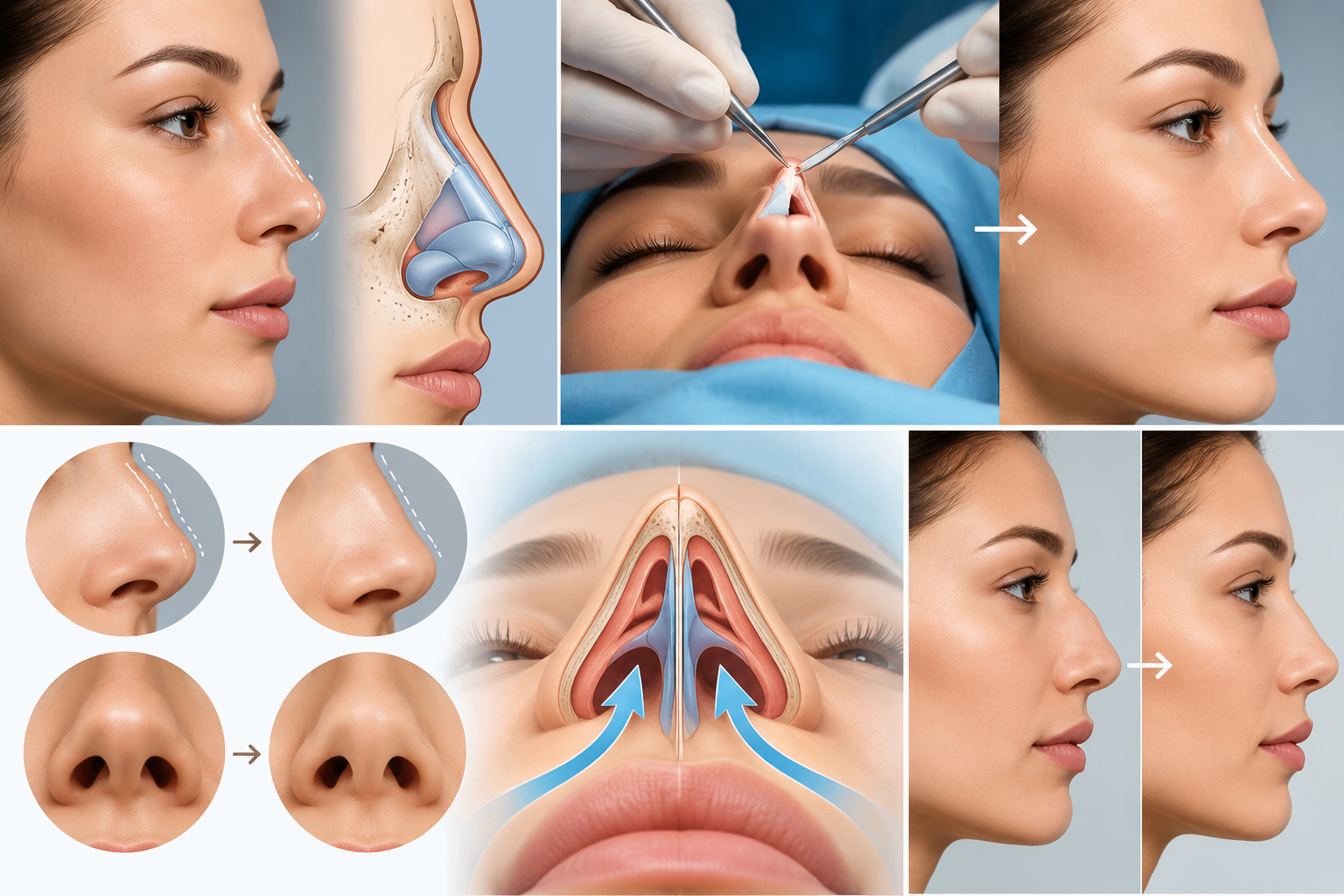
What Is Rhinoplasty? What You Need to Know About Nose Aesthetics
Rhinoplasty is a surgical procedure performed to change the shape, size, and proportion of the nose in harmony with the face. In addition to improving appearance, it may also help address certain breathing problems.

How to Choose a Hospital for Cosmetic Surgery in Turkey?
For patients planning cosmetic surgery in Turkey, choosing a hospital requires evaluating several factors together, including the surgeon’s experience, the hospital’s technical infrastructure, healthcare tourism capabilities, and postoperative care.